In the Loop
Redefining professional mobility as a tool for community building and intentional growth.

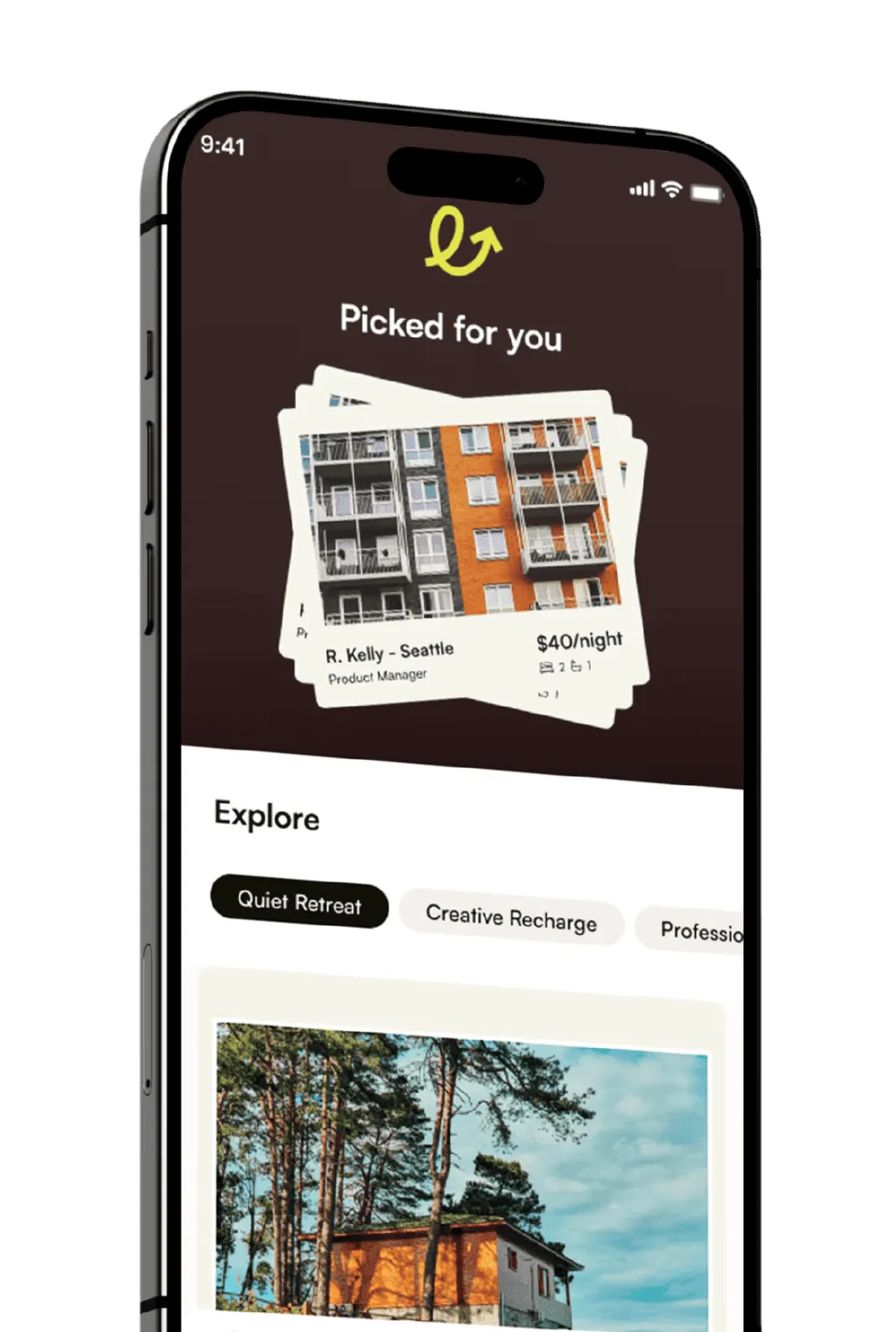
In the Loop is a digital platform that reimagines mobility as a tool for growth.
It matches professionals with curated stays and communities based on their background, goals, and industry, helping you find stays and connections that inspire, not just accommodate.
Empowering professionals to move intentionally, work seamlessly, and live beyond the routine.
THE AVERAGE EMPLOYEE SPENDS
0
HOURS
at work over a lifetime — that's a full decade of your adulthood, gone.
0
YEARS OF YOUR ADULTHOOD
How might we help professionals find meaningful places and people that support their growth, connection, and lifestyle?
A digital platform intentionally designed for professionals
seeking flexible accommodations and meaningful connections.
They aren’t just dissatisfied with their work, but also
with how and where they work from.
“Social interactions during my workday help me cope with my work stress.”
“Confused between the sentiments that come with WFH and working from office.”
”I cope with work stress by walking, taking time away from my desk, doing a short exercise, or changing my work environment.”
“Working by a beach is my dream scenario.”
👋 Drag around
These conversations helped shape our key takeaways.
Remote work means freedom to go anywhere but finding places that actually fuel creativity, not just provide WiFi, is still a puzzle
Monotonous routines drain energy and kill innovation. There is no variety, no unexpected experiences to break the loop
Limited social interaction leaves people isolated, missing the mentors, collaborators, and community that make work meaningful
Existing platforms treated these as separate problems:
 Airbnb
Solved where to stay
 Luma
LumaSolved what to do
 LinkedIn
Solved who to connect with
But nobody
connected the dots.
Where you go, whom you meet, and where you’re trying to grow remained siloed experiences. That’s the gap In the Loop was designed to fill.
Before building In the Loop, we tested an earlier concept called Out of Office, which shaped everything that came after.
Out of Office aims at providing affordable
home swaps for working professionals
- Seamless home-swapping
- Work-friendly spaces
- Stay for a fraction of the cost
How we tested it
- Strong desire for affordable, flexible accommodations
- Users valued building trust within a professional network
- Curation toward employee needs resonated strongly
- Direct swaps created logistical friction users didn't want
- Narrow audience limited growth potential
- Swap-only model restricted community building
- Users arrived with needs that a home-swapping model could not account for
From home swapping
to intentionally
hosted stays.
Testing showed users wanted flexibility beyond just direct swaps where scheduling was rigid and use cases were broader. We evolved from a swap model to a trusted hosted-stay network, preserving the core values of affordability, community, and professional alignment.
How we tested
What we fixed
Users didn't know what the platform offered before being asked to complete onboarding.
Action Frontload the value proposition before any sign-up questions.
Users expected to reach a host's full profile directly from the listing, and not a toggle.
Action Direct link from listing card to full host profile.
Local recommendations were invisible when buried inside the host profile.
Action Surfaced as a persistent card earlier in the flow.

A platform connecting professionals through
intentional, hosted stays — built on trust,
shared values, and community.
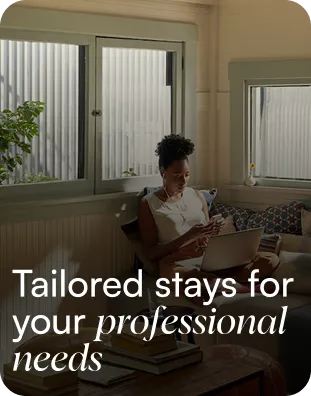

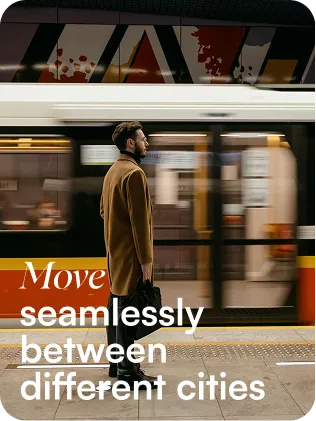
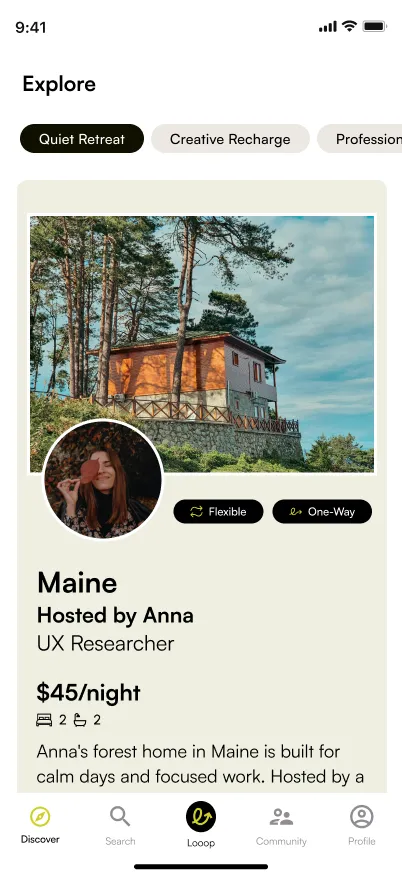
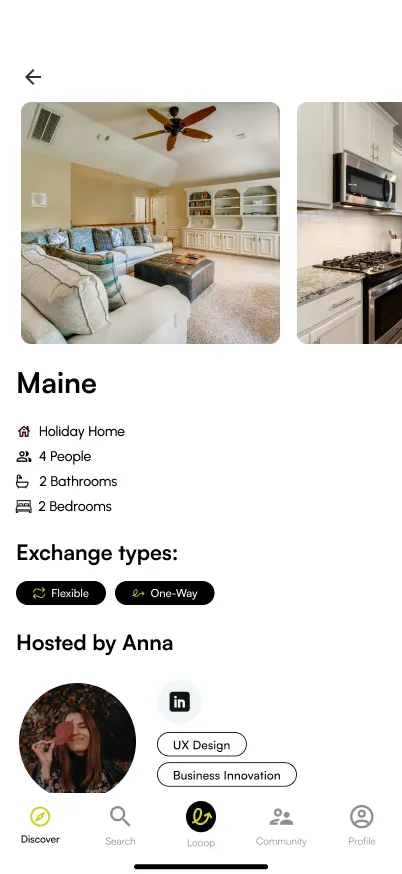
Beyond rigid booking models, In the Loop offers stay types that match
how professionals actually move.

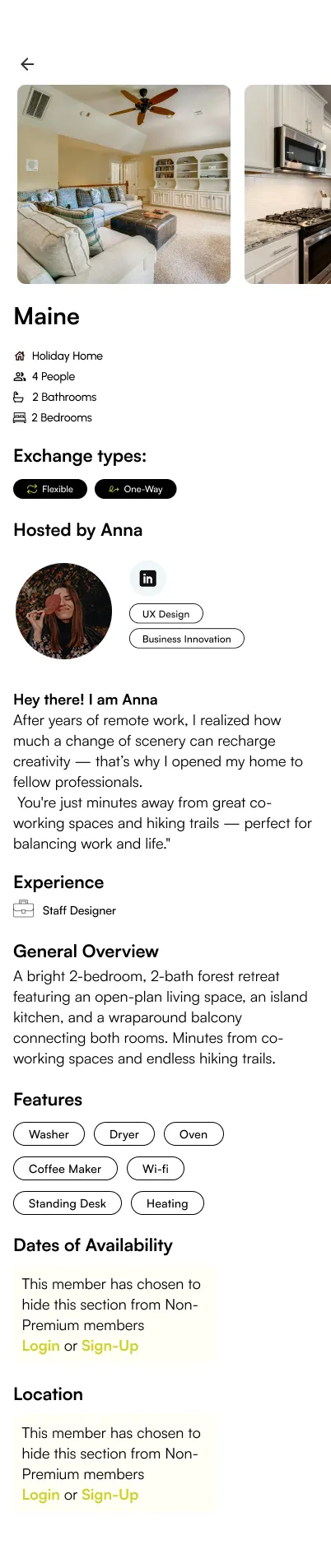
Synchronized
A synchronized stay is between two members traveling to each others home at the same time

Flexible
A flexible stay is between two members traveling to each other's home at different times

One-Way
A one-way stay is where only one member travels to another's home and has a full house to use

Shared
A shared stay is where a member travels to another's home while that member is still there
Core features designed to help you discover your perfect work-and-travel experience.

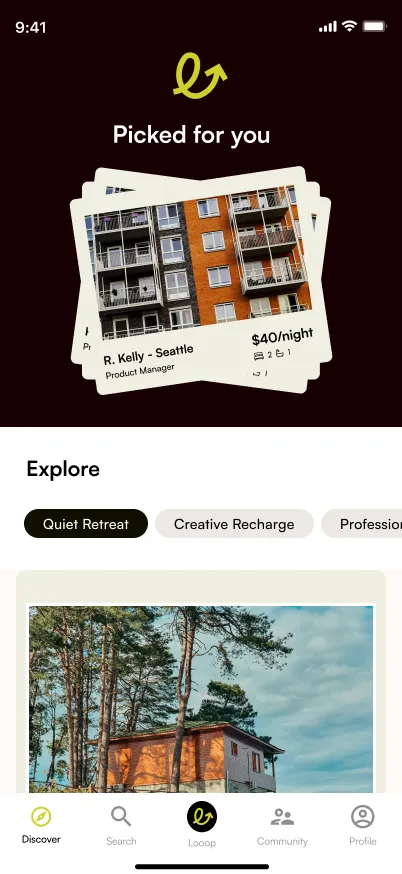
Curated stays and people matched to your professional background, goals, and industry. As your career shifts, so do your picks.




Go beyond just booking a stay and engage with the working professionals who host you.

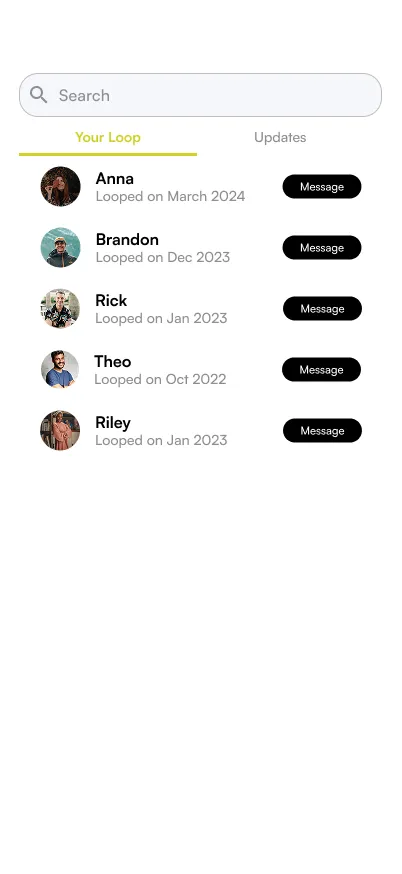
The journey doesn’t end when your stay does. Stay connected with your hosts and fellow professionals.


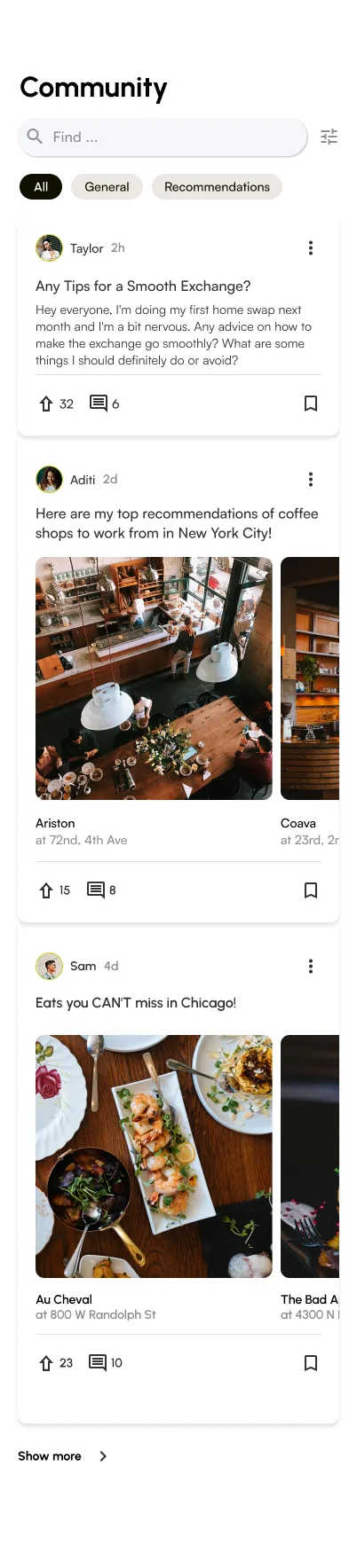
Unlock genuine, community-driven recommendations from fellow professional.
At its core, In the Loop is not just about travel. It is about movement with meaning.
When people move with purpose, the effects ripple far beyond the individual.

Individual
At the individual level, it helps people combat burnout by breaking routine.

Organization
For organizations, it is not just a perk, it is a strategic edge. Employees return with fresh ideas, new energy, and stronger engagement.

Society
And at a societal level, it helps build tight-knit communities that are rooted in shared values.
So if we’re going to spend 90,000 hours of our lives working, why not make them the most meaningful and engaging?
The pivot
The biggest moment in this project was not a design decision; it was the pivot. We had built Out of Office from the ground up: brand language, voice, target market, service model. It felt solid. But when we put it in front of users, the logistical friction of direct home-swapping was a dealbreaker, and more importantly, we had missed the deeper problem entirely. Working professionals were not just looking for a place to stay. They were looking for genuine connection. A network that moved with them. That distinction only became clear through concept testing. The feedback from our 19 stakeholders did not just refine the product, it fundamentally redirected it. Without that phase, we would have built the wrong thing with full conviction.
What I would do differently
We moved quickly into brand language for Out of Office because we believed in the concept. Looking back, I would have pushed to test the concept’s validity first, belief is not validation. Concept testing earlier would have given us the same pivot with significantly less time and resources spent getting there.